Experiential marketing in 2025 didn’t follow a single script. Brands went in four directions at once: playful, restrained, immersive, and spectacular, and the results were some of the most culturally resonant activations in recent memory. What separated the best from the rest wasn’t budget or boldness. It was a clear understanding of the audience and the moment. Here’s what stood out.
Unlikely Pairings: Serious Brands Learning to Play
As purchasing power shifts toward younger millennials and older Gen Z, legacy brands are stepping into playful, unexpected contexts to stay relevant. “Serious” sectors like banking, home goods, and luxury are embedding themselves in festivals, fashion, and fandom culture – leaning away from polished distance toward participation and fun.
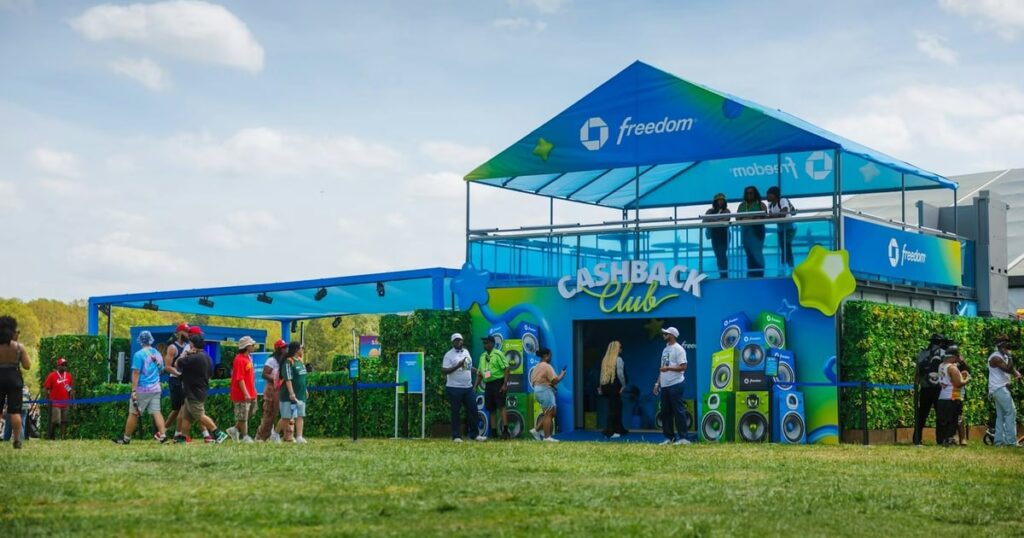
At Dreamville Fest last year, Chase Freedom showed how a credit card can behave more like an entertainment brand. The Cashback Club turned a festival corner into a high-energy playground – a freestyle basketball game where fans could shoot hoops, unlock rewards, and catch on-site performances and special celebrity appearances. It wasn’t just financial services. It was a hyperactive weekend highlight.
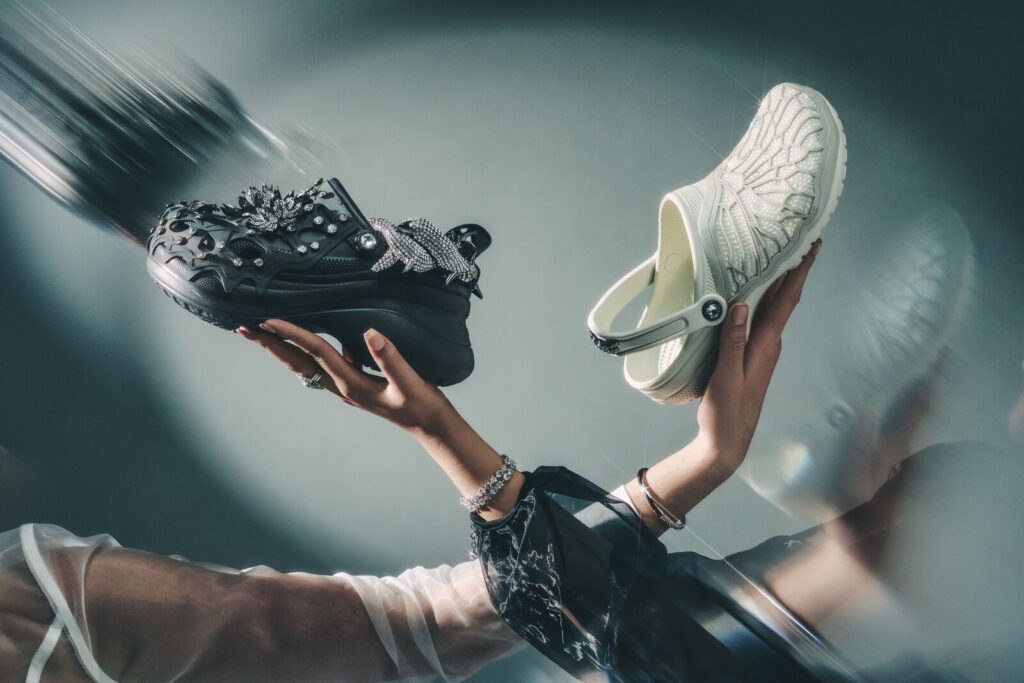
Crocs x Swarovski pulled off something arguably more unlikely. The idea of a crystal-encrusted Croc once would have read like a meme; in 2025, it landed as a serious fashion statement. The collaboration came to life through an exclusive gallery-style installation in Singapore’s VivoCity, with live customisation, and a high-end influencer dinner, turning the foam clog into a glitzy collectible that bridges comfort footwear and luxury accessories. Both activations point to the same logic: audiences reward brands willing to be a little ridiculous, as long as the commitment is real.
Soft Sanctuaries and Busy Season Escapes
Not every brand went loud. Running counter to the maximalist instinct, 2025 also saw brands carving out deliberate spaces of calm within high-energy environments. These weren’t passive; they were a strategic choice to align with slow living and wellness narratives gaining mainstream traction.
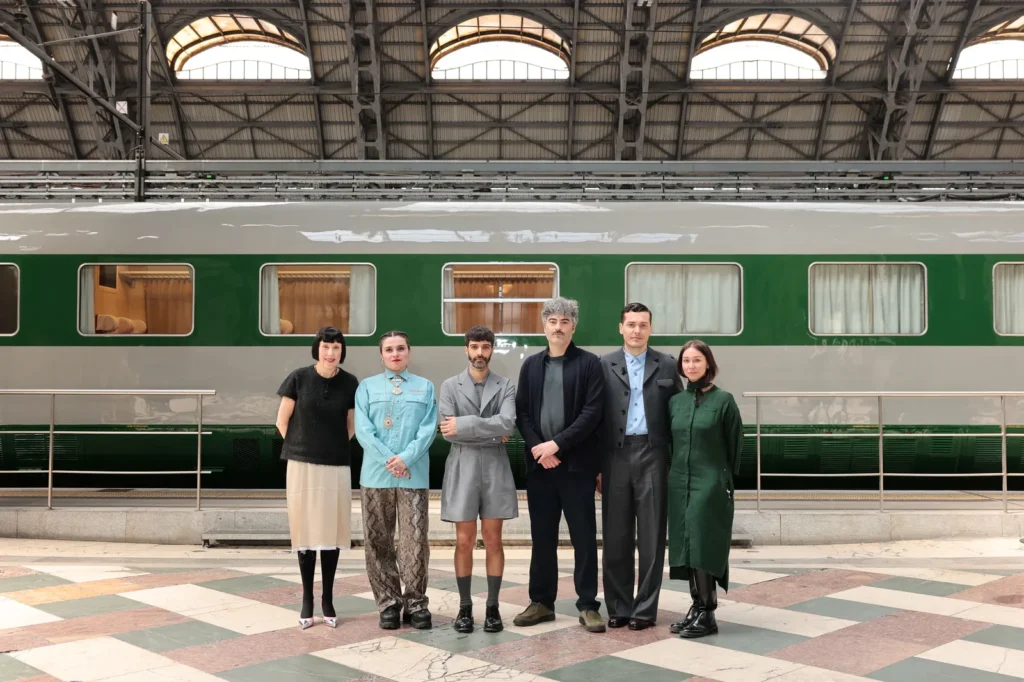
The fourth edition of Prada Frames took place during Milan Design Week, one of the design calendar’s most frenetic weeks, but deliberately operated at a different pace. Set aboard Gio Ponti’s restored Arlecchino train as it moved through the city, the experience transformed a historic carriage into a moving space for intimate conversation on architecture and ecology. Exclusive, unhurried, and entirely removed from the week’s noise — it positioned Prada as a cultural steward rather than a brand chasing attention.
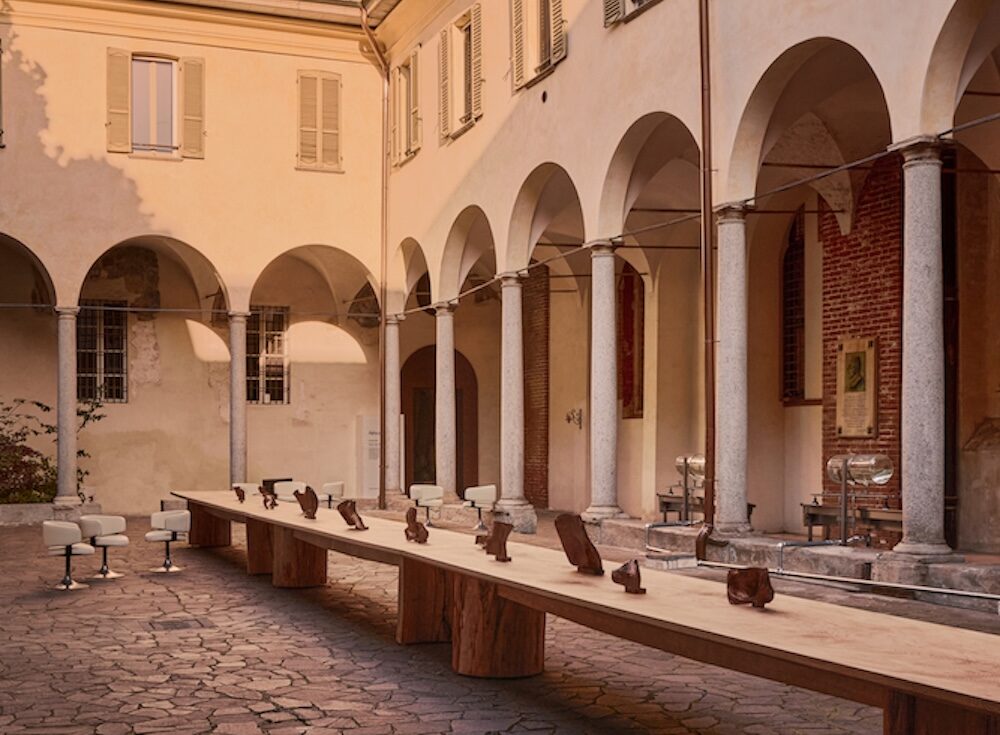
Aesop’s Second Skin, also staged at Milan Design Week, took a similarly understated route. Rather than a product showcase, it offered a softly lit, multi-sensory installation rooted in touch and introspection, with guided rituals that reframed skincare as recovery from the city’s friction. No hard sell. No calls to action. The brand’s reward was something harder to manufacture than reach: genuine trust.
Surreal Immersion and Live Theatrics
In a world saturated with AI-generated content and endlessly curated feeds, 2025 saw a growing appetite for experiences that are physically, undeniably real. Brands responded by building live environments that don’t just reference a world, they behave like one.
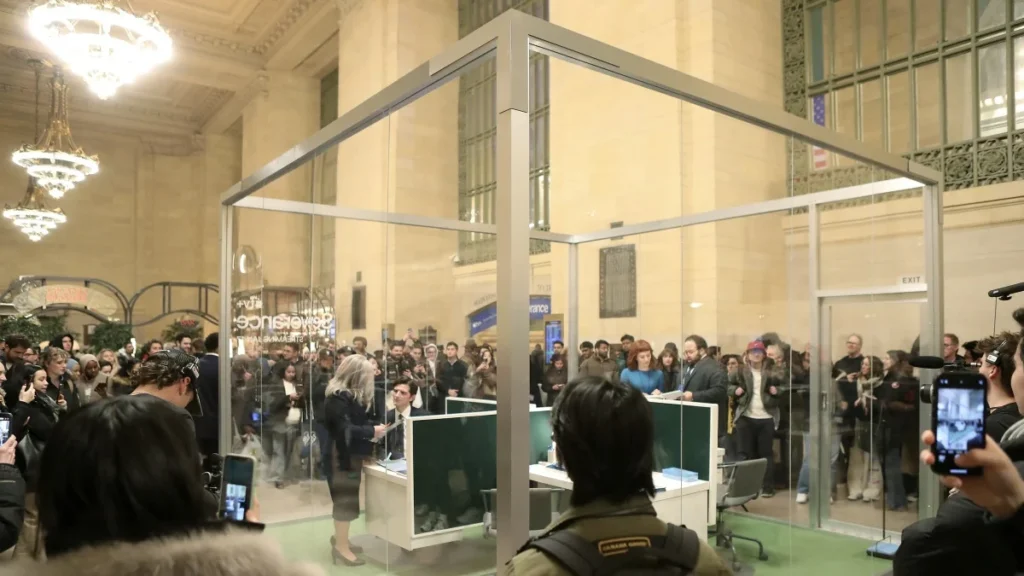
Apple TV+ brought Severance’s Lumon Industries into Grand Central Terminal in New York through a glass-box office installation. Commuters walking through one of the busiest transit hubs in the world could stop and watch a fully built Lumon set where in-character cast members performed their mundane, unsettling routines in real time. The dissonance between the show’s eerie corporate world and the rush of everyday New York life was entirely the point, and impossible to scroll past.
HBO’s White Lotus activation took a different approach. Partnering with the Four Seasons Hotel Westlake Village in California and American Express, the brand hosted a multi-day immersive wellness retreat at a functioning luxury hotel layered with narrative cues from the show. Rather than building a separate set, the activation used the hotel itself as the world, hospitality experiences, programming, and integrated brand partnerships all calibrated to the show’s tone of indulgence and barely-contained tension. Guests weren’t watching the story. They were inside it.
Larger Than Life Still Looms
Bigger is not automatically better, but when the idea is strong enough to carry the scale, spectacle still cuts through like nothing else. In 2025, the brands that went large delivered some of the year’s most immediately shareable moments.
Kellogg’s leaned into scale to reassert visibility in a crowded landscape near the Kellogg’s cereal factory in Wrexham, UK. By transforming its iconic Cornelius mascot into a 21-foot weathervane — the largest ever in the UK — the brand turned a familiar asset into a record-breaking physical landmark. No context needed. Instantly recognisable, inherently shareable, completely unmissable.
For El Clásico between Real Madrid and FC Barcelona, Emirates found a way to transcend the sponsorship category entirely. A drone shaped like an Emirates-branded plane descended into the centre circle just before kick-off and delivered the official match ball onto the pitch. In a sport where brands compete for space on barriers and shirt sleeves, Emirates became the spectacle itself.
Red Bull pushed furthest for the inaugural Tetris World Final in Dubai, where the brand chose the Dubai Frame as its stage — a 150-metre arch-shaped landmark that physically frames Dubai’s old and new skylines and stands as one of the city’s most iconic structures. Using over 2,000 drones as programmable pixels across the Frame’s surface, Red Bull staged the world’s largest playable Tetris game, and the first official live Tetris competition ever held in open sky. A game about fitting pieces into the right place, played on a structure built to frame two worlds.
The takeaway?
Across 2025, experiential marketing expanded in multiple directions at once. Brands became more playful, more immersive, and at times more restrained. The formats varied; the underlying instinct didn’t. Whether through participation, storytelling, or sheer scale, the most effective work moved beyond visibility to create moments that felt distinct, memorable, and worth sharing. The brands that got it right weren’t just showing up — they were reading the room.